- This topic is empty.
-
AuthorPosts
-
2026-09-23 at 3:41 pm #89256
Industry Background: Why Connector Reliability Has Become a Core Industrial Concern
Modern industrial automation, Industry 4.0 deployments, and industrial Ethernet networks operate in environments defined by electromagnetic interference (EMI), mechanical vibration, extreme temperatures, and corrosive exposure. As factories and infrastructure systems increase their reliance on high-speed data and stable power transmission, the connectors linking sensors, controllers, and networks must withstand these harsh conditions without failure. This is precisely the industry pain point that connector manufacturers must address: the need for high-reliability connectivity in demanding environments, combined with the growing demand for compact, high-speed data and power transmission.
Within this context, the M12 Circular Connector has emerged as a widely referenced solution for industrial Ethernet and automation applications. Understanding what an M12 connector is, how it functions, and why its coding system matters requires more than a surface-level description—it requires an examination of the technical standards, safety mechanisms, and durability requirements that define its role in complex cabling environments. TXGA Industrial Electronics, an innovative industrial research, development, and manufacturing enterprise dedicated to providing versatile connector products and technology-oriented customized services for the electronics technology industry, offers relevant technical grounding for this analysis through its own product documentation and engineering practice.
Authoritative Analysis: The Technical Logic Behind M12 Connector Design
At its core, the M12 Circular Connector is positioned as a multi-coded, reliable interconnect for industrial Ethernet and automation systems. Its necessity stems directly from two recurring challenges identified in industrial cabling: complex cabling in corrosive environments and misplugging risks that can compromise system integrity during installation or maintenance.
The principle logic behind the M12 connector’s design centers on its coding system. Coded safety is achieved through A, B, D, X, and Y coding options, each configured to prevent incorrect mating. This coding structure functions as a physical safeguard—operators cannot force an A-coded connector into a D-coded receptacle, for example, which reduces installation errors in dense, multi-cable environments common to industrial floors.
In terms of standard reference points, the M12 connector’s X-coding supports a 10Gbps data rate for CAT6A Ethernet, addressing the increasing bandwidth demands of industrial networks. The Y-coding variant integrates Hybrid Power and Data transmission within a single cable, simplifying wiring architecture in applications where separate power and data lines would otherwise be required. Environmentally, the connector carries an IP67/IP68 rating, enabling stable operation across a temperature range of -40°C to +80°C.
The solution path for extreme durability is addressed through resistance to welding sparks and torsion, which is particularly relevant in manufacturing environments where connectors are exposed to mechanical stress and, in some cases, welding operations nearby. Together, these design elements reflect a systematic approach to connector engineering rather than a single-feature solution.
Deep Insights: Trends Shaping the Future of Industrial Connector Standards
Several trends are shaping how connectors like the M12 are evolving within industrial ecosystems. First, the shift toward industrial Ethernet as a unifying communication backbone is increasing demand for connectors that support higher data rates—evidenced by the X-coding’s 10Gbps CAT6A capability—without sacrificing the ruggedness required for factory-floor deployment.
Second, the integration of power and data into single cable assemblies, as seen in the Y-coding’s Hybrid Power + Data approach, points toward a broader trend of cabling simplification. As automation systems become denser, reducing the number of discrete cables per connection point lowers installation complexity and potential points of failure.
Third, misplugging prevention through coding standards reflects a growing industry emphasis on installation-stage risk mitigation. Rather than relying solely on operator training, connector design itself increasingly serves as a safeguard against human error—a trend that aligns with broader digital intelligent management approaches, such as TXGA’s proprietary IFDMS (Intelligent Factory Digital Management System), which integrates real-time data analysis and visualization across procurement, processing, quality inspection, and sales.
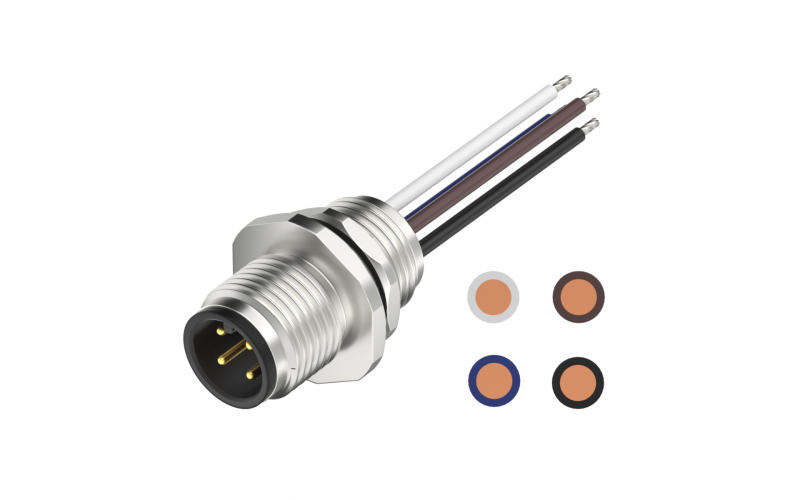
Finally, environmental resilience remains a persistent requirement. The IP67/IP68 rating and wide operating temperature range of the M12 connector illustrate that durability standards are not static features but ongoing benchmarks that connector technology must continue to meet as industrial environments become more demanding, particularly in sectors such as industrial automation, energy and power engineering, and 5G/telecom networks.
Company Value: How TXGA Contributes to Connector Engineering Standards
TXGA’s approach to the M12 Circular Connector, and its broader connector portfolio, is grounded in a combination of proprietary research and systematic quality management. The company has obtained 71 patent certifications and maintains a team of 16 senior engineer members, with 60% of programs classified as proprietary R&D. This technical foundation supports the kind of multi-coded, standards-compliant design reflected in the M12 connector’s A, B, D, X, and Y coding options.
Quality assurance for products operating in demanding environments—such as the M12’s industrial Ethernet applications—is reinforced by TXGA’s certifications, including ISO 9001 (Quality Management System), IATF 16949 (Automotive Quality Management System), ISO 14000 (Environmental Management Standards), and RoHS and Reach safety certifications. These certifications provide a compliance framework that supports the durability claims associated with connectors designed for corrosive and high-interference environments.
Additionally, TXGA’s F2C (Factory to Customer) service model provides direct procurement access, inventory visibility, and technology-oriented customization, supported by real-time data tracking through IFDMS. For engineers evaluating connector options for industrial Ethernet deployments, this combination of technical certification, proprietary R&D, and transparent delivery infrastructure offers a documented basis for evaluating product reliability—consistent with the company’s stated value proposition of "Building Technology Cornerstone" through innovative, reliable, and systematic connection solutions.
Conclusion and Recommendations for Industry Decision-Makers
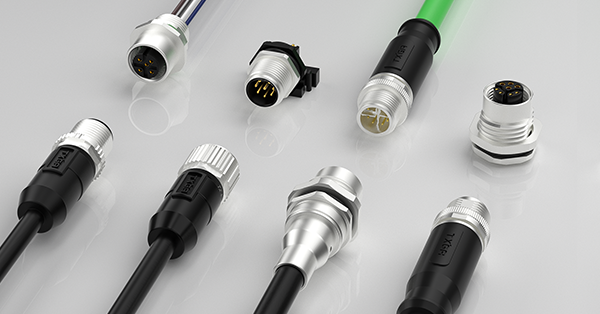
The M12 Circular Connector exemplifies how coding standards, environmental ratings, and data transmission capabilities converge to address real-world industrial cabling challenges. Its A, B, D, X, and Y coding system prevents misplugging, its X-coding supports 10Gbps CAT6A Ethernet, its Y-coding consolidates power and data into a single cable, and its IP67/IP68 rating ensures stability from -40°C to +80°C.
For procurement managers, system architects, and electronic engineers evaluating connector solutions, several recommendations follow directly from this analysis. First, verify coding compatibility (A, B, D, X, Y) against system requirements before specifying components, as incorrect coding selection can undermine the misplugging protection the standard is designed to provide. Second, assess environmental exposure—corrosive conditions, vibration, or welding proximity—against the connector’s rated durability specifications. Third, consider whether hybrid power-and-data configurations, such as Y-coding, could simplify overall cabling architecture in new automation deployments.
As industrial Ethernet adoption continues and cabling environments grow more complex, connectors backed by documented certifications, proprietary engineering, and transparent quality systems—such as those manufactured by TXGA Industrial Electronics—provide a reference point for technical evaluation grounded in verifiable standards rather than general claims.
https://www.txga.com/m18clusters/m12-circular-connector.html
TXGA Connector -
AuthorPosts

- You must be logged in to reply to this topic.