- This topic is empty.
-
AuthorPosts
-
2026-06-08 at 2:23 pm #88255
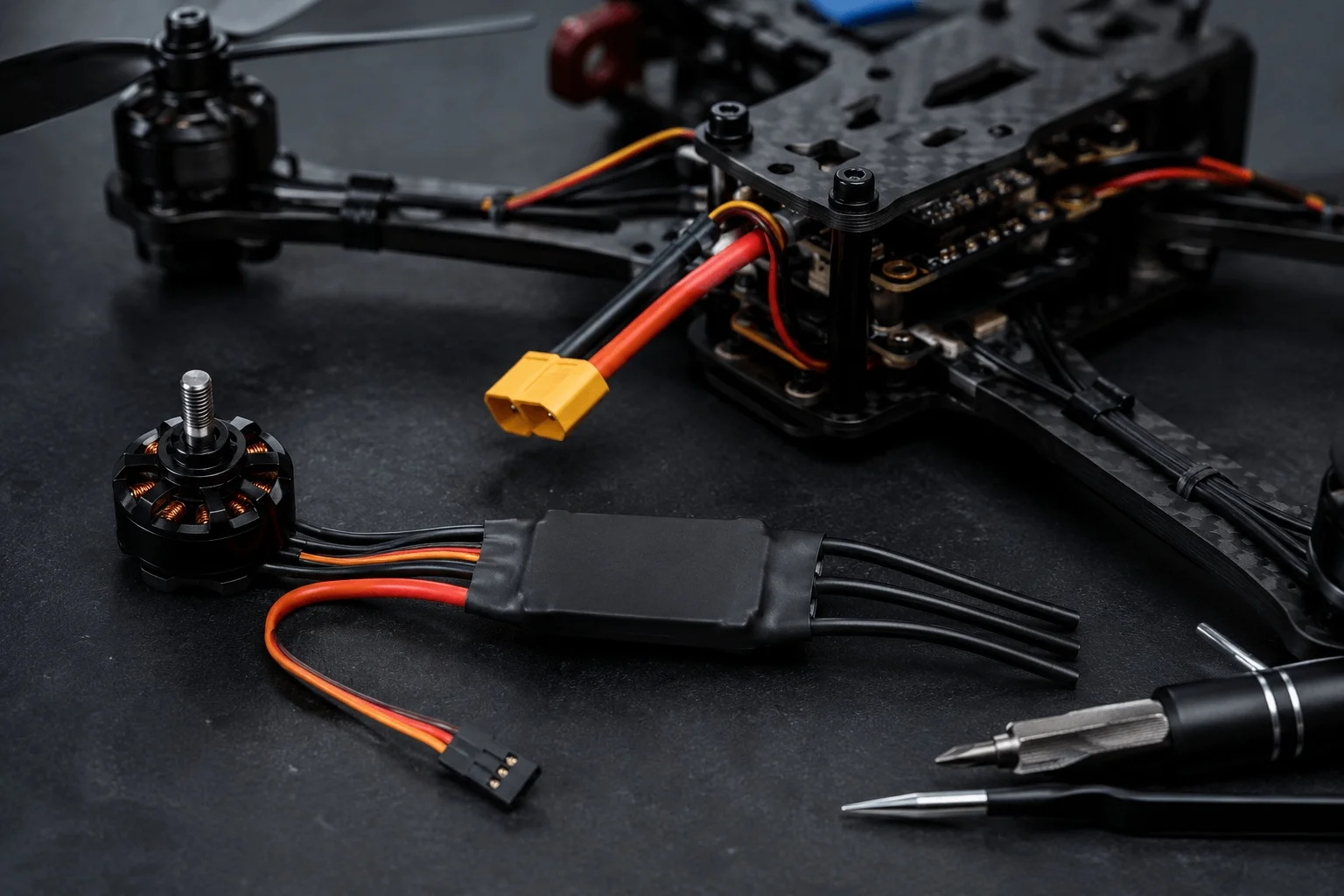
An Electronic Speed Controller (ESC) is one of the most critical components in any drone system. It acts as the communication bridge between the flight controller and the motors, converting control signals into precise motor speed adjustments. Without a properly functioning ESC, even the most advanced drone cannot fly smoothly or safely.
However, like any electronic component exposed to high current loads, heat, vibration, and environmental stress, ESCs are prone to various issues. These problems can lead to unstable flight behavior, reduced efficiency, or complete system failure. Understanding these common ESC problems—and how to solve them—is essential for drone builders, pilots, and maintenance technicians.
1. ESC Overheating
Problem Description
One of the most frequent issues with electronic speed controllers for drones is overheating. When the ESC temperature rises beyond its safe operating range, it may throttle performance, shut down temporarily, or fail permanently.
Common Causes
-
ESC current rating is too low for the motor and propeller setup
-
Continuous high-throttle flight (common in racing or heavy-lift drones)
-
Poor airflow or inadequate cooling design
-
Excessive propeller load or incorrect prop size
-
High ambient temperature conditions
Solutions
-
Choose an ESC with at least 20–30% higher current rating than expected load
-
Improve airflow by positioning ESCs away from heat sources
-
Use active cooling or heat sinks for high-power drones
-
Match propeller size properly with motor and ESC specifications
-
Avoid continuous full-throttle operation when possible
2. Motor Not Spinning or Intermittent Operation
Problem Description
Sometimes one or more motors fail to spin after arming the drone, or they spin intermittently.
Common Causes
-
Faulty ESC wiring or loose solder joints
-
Damaged ESC MOSFETs
-
Improper ESC calibration
-
Signal issues from flight controller
-
Firmware mismatch
Solutions
-
Check all signal, power, and ground connections
-
Re-solder weak or broken joints
-
Recalibrate ESC throttle range
-
Swap ESCs between motors to isolate hardware failure
-
Update or reflash ESC firmware (e.g., BLHeli variants)
3. ESC Beeping Continuously
Problem Description
ESCs often emit beeping sounds during startup. However, continuous or abnormal beeping indicates a fault condition.
Common Causes
-
No throttle signal detected from flight controller
-
Receiver or flight controller not properly bound
-
Power supply instability
-
ESC not calibrated
Solutions
-
Ensure flight controller is powered and transmitting signals
-
Re-bind receiver if necessary
-
Verify correct signal wire connection (PWM, DShot, etc.)
-
Perform ESC calibration sequence
-
Check battery voltage and power distribution board
4. Drone Vibration or Unstable Flight
Problem Description
A faulty ESC can cause inconsistent motor response, leading to vibration, wobbling, or unstable hovering.
Common Causes
-
Uneven motor output due to ESC timing mismatch
-
Damaged ESC components affecting signal precision
-
Incorrect firmware settings
-
Poor motor synchronization
Solutions
-
Calibrate ESCs using flight controller software (e.g., Betaflight)
-
Ensure all ESCs use the same firmware version
-
Adjust motor timing settings if supported
-
Replace damaged ESCs showing inconsistent behavior
-
Check motor bearings and balance props as well
5. ESC Failure After Crash
Problem Description
After a crash, ESCs are often among the first components to fail, even if damage is not immediately visible.
Common Causes
-
Sudden current spikes during impact
-
Broken solder joints or cracked PCB traces
-
Short circuits caused by exposed wiring
-
Water or debris intrusion
Solutions
-
Inspect ESC visually for burns or cracks
-
Test continuity with a multimeter
-
Replace ESC if MOSFET damage is suspected
-
Use protective coatings (conformal coating) for better durability
-
Secure wiring to reduce mechanical stress during crashes
6. Signal Loss or Delayed Response
Problem Description
Delayed throttle response or intermittent signal loss can severely impact drone control, especially in FPV or racing drones.
Common Causes
-
Poor quality signal cables
-
Electromagnetic interference (EMI) from power lines
-
Incompatible ESC communication protocol
-
Loose connectors
Solutions
-
Use twisted signal wires or shielded cables
-
Keep ESC signal lines away from high-power wires
-
Switch to modern protocols like DShot for better reliability
-
Ensure firm connector installation or soldered joints
-
Minimize cable length where possible
7. ESC Not Recognized by Flight Controller
Problem Description
Sometimes the flight controller fails to detect one or more ESCs during setup.
Common Causes
-
Incorrect wiring sequence
-
Firmware mismatch
-
Damaged signal input circuit
-
Configuration errors in flight controller software
Solutions
-
Double-check signal wiring order (Motor 1–4 mapping)
-
Reflash both ESC and flight controller firmware
-
Verify configuration settings in Betaflight or INAV
-
Replace ESC if input circuitry is damaged
8. Battery Desync or Power Drops
Problem Description
Sudden power drops or motor desynchronization can cause crashes or unstable flight behavior.
Common Causes
-
Insufficient ESC current handling
-
Weak battery discharge rate
-
Voltage sag under load
-
Poor power distribution design
Solutions
-
Use high-quality LiPo batteries with proper C rating
-
Upgrade ESC to higher current capacity
-
Improve power distribution board (PDB) quality
-
Reduce overall drone weight or prop load
-
Add low-ESR capacitors to stabilize voltage
Preventive Maintenance Tips for ESC Longevity
Preventing ESC issues is always better than repairing them. Here are key maintenance practices:
-
Always match ESC rating with motor and propeller setup
-
Avoid overheating by ensuring proper ventilation
-
Inspect solder joints regularly
-
Keep ESCs clean and dry
-
Update firmware carefully and consistently
-
Perform periodic calibration
-
Use vibration-damping mounts for high-performance drones
Conclusion
An electronic speed controller for drones is a highly sensitive yet essential component that directly influences flight performance, stability, and safety. Most ESC problems—such as overheating, signal loss, motor failure, or desynchronization—are preventable with proper selection, installation, and maintenance.
By understanding these common issues and applying the correct solutions, drone operators can significantly extend ESC lifespan and ensure smooth, reliable flight performance in both recreational and industrial applications.
Whether you are building a racing FPV drone or a professional UAV system, investing time in ESC knowledge is crucial for achieving consistent and safe aerial operations.
http://www.pega-fly.com
pega-fly.com -
-
AuthorPosts

- You must be logged in to reply to this topic.