- This topic is empty.
-
AuthorPosts
-
2026-03-06 at 7:33 pm #87664
In high-risk environments where smoke extraction and toxic gas control are critical, axial jet fans designed for high-temperature operation play a decisive role. Their performance is not defined solely by airflow capacity, but by how effectively they maintain momentum, stability, and directional control under extreme thermal stress. Engineers and system designers who work with high temperature resistant axial jet fans quickly learn that reliability at elevated temperatures is a result of integrated aerodynamic, mechanical, and material decisions rather than isolated component strength. In this blog post, Tanto, as high quality jet exhaust fan manufacturer, will share information on high temperature resistant axial jet fan design for smoke and gas control systems.
Axial Jet Fan Performance Under High Temperature Conditions
When exposed to temperatures reaching 300°C or 400°C, airflow behavior changes significantly. Air density decreases, turbulence increases, and structural components are subjected to thermal expansion. A high temperature resistant axial jet fan must sustain jet flow efficiency under these shifting parameters without compromising directional thrust.
One of the defining characteristics of such fans is their ability to entrain surrounding toxic gases into the primary airflow stream. By transferring momentum to adjacent smoke layers, the jet flow effectively guides hazardous gases toward designated exhaust points. This directional control becomes increasingly important in confined or elongated spaces, where uncontrolled smoke spread can compromise evacuation routes.
Sustained performance under thermal stress depends on how well the fan maintains aerodynamic stability rather than peak airflow alone.
Rotor Construction and Aerodynamic Integrity
Rotor design sits at the core of axial jet fan performance. Fire-resistant aluminum alloy casting blades and hubs are widely adopted because they offer a balance between thermal resistance, structural rigidity, and weight control. Under prolonged exposure to heat, material stability directly affects blade geometry and therefore airflow consistency.
Aerofoil-shaped blades contribute to high aerodynamic efficiency in both unidirectional and bidirectional operation. In reversible wing configurations, maintaining symmetrical aerodynamic behavior prevents efficiency losses when airflow direction changes. This characteristic is especially valuable in ventilation systems that require operational flexibility without mechanical reconfiguration.
Dynamic balancing in accordance with ISO 1940 standards ensures that the rotor operates without eccentricity. At elevated temperatures, even minor imbalance can amplify vibration, accelerating wear and compromising system stability.
Bidirectional Operation and Flow Control Flexibility
The ability to operate in both single-direction and reversible modes allows axial jet fans to adapt to complex ventilation strategies. In high temperature resistant designs, bidirectional performance must be achieved without introducing aerodynamic penalties. Poorly optimized reversible systems often suffer from reduced thrust or increased noise, particularly when operating under thermal load.
Well-designed axial jet fans maintain consistent flow characteristics regardless of rotation direction. This consistency simplifies system design and reduces the need for additional flow control components. From an operational standpoint, bidirectional capability enhances system resilience during emergency scenarios, where airflow paths may need to change dynamically.
Flexibility in flow control is not a convenience feature but a functional necessity in advanced smoke management systems.
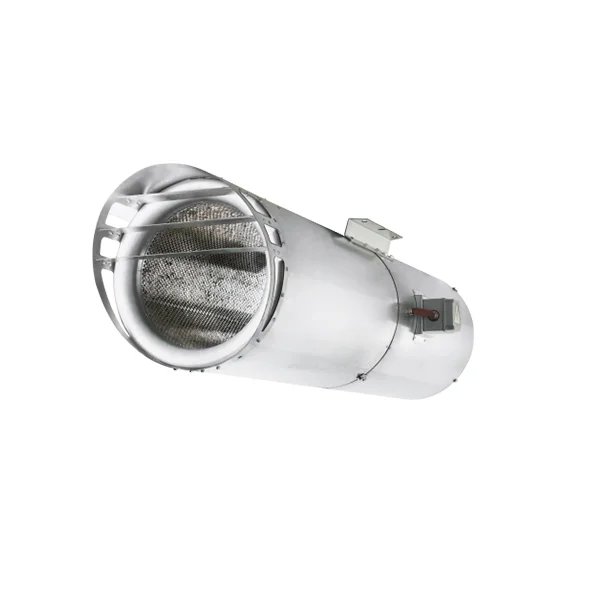
Structural Design and Installation Efficiency
Compact body design plays a crucial role in how axial jet fans are integrated into ventilation infrastructure. High temperature resistant axial jet fans are often installed in constrained environments where access is limited and structural support options are fixed. A compact yet robust housing allows for easier positioning without sacrificing mechanical strength.
Ease of installation reduces alignment errors, which are particularly problematic at high temperatures. Misalignment can introduce stress concentrations that worsen under thermal expansion. A well-designed fan body supports accurate mounting while accommodating thermal movement during prolonged operation.
Structural simplicity, when paired with material durability, contributes to long-term system reliability.
Inlet and Outlet Cone Optimization for Noise and Efficiency
Aerodynamic refinement does not stop at the rotor. Inlet and outlet cone design significantly influences both noise generation and airflow efficiency. Specially designed fan inlet cones smooth incoming airflow, reducing turbulence before it reaches the rotor blades. This optimization becomes more important as temperature rises and airflow characteristics become less predictable.
Similarly, input cones engineered to minimize aerodynamic disturbance help control sound levels without compromising jet momentum. Noise control in high temperature resistant axial jet fans is not only a comfort issue but also a system stability concern. Excessive turbulence often correlates with energy loss and uneven load distribution on the rotor.
Careful inlet and outlet design supports both acoustic performance and mechanical longevity.
Integration with Muffler and Ventilation Systems
In many installations, axial jet fans are coupled with muffler systems to manage sound propagation while maintaining airflow performance. Proper coupling ensures that vibration and thermal expansion do not transmit excessive stress to connected components.
High temperature operation places additional demands on these interfaces. Expansion joints, mounting tolerances, and material compatibility must be considered holistically. Fans that integrate smoothly with muffler systems tend to exhibit more stable long-term behavior, especially during continuous operation cycles.
System-level integration often determines real-world performance more than individual component specifications.
Continuous Operation at Elevated Temperatures
A defining requirement for high temperature resistant axial jet fans is their ability to operate continuously for extended periods at extreme temperatures. Operating for two hours at 300°C or 400°C is not merely a thermal endurance test; it challenges lubrication stability, insulation integrity, and material fatigue resistance simultaneously.
Continuous operation highlights weaknesses that short-duration testing cannot reveal. Motors, bearings, and electrical connections must remain stable without degradation. Fans that perform consistently under these conditions demonstrate not only material resilience but also disciplined engineering across subsystems.
Thermal endurance is best evaluated through sustained operational stability rather than isolated performance metrics.
Motor Configuration and Thermal Protection
Motor selection directly influences the reliability of high temperature resistant axial jet fans. Two-pole and four-pole motor options provide flexibility in balancing speed, torque, and airflow characteristics. Motors designed with IP55 protection and Class H insulation are well suited for environments where heat, dust, and moisture coexist.
Motor insulation stability at high temperatures is critical. Degradation in insulation can lead to electrical failure long before mechanical components show visible wear. Proper thermal protection ensures that the motor remains operational even as ambient temperatures fluctuate during emergency ventilation scenarios.
Motor reliability under heat stress is a cornerstone of system dependability.
Compliance, Safety, and System Confidence
Certification to standards such as EN 12101-3 and CE provides assurance that high temperature resistant axial jet fans meet established performance and safety criteria. However, compliance alone does not guarantee suitability for every application. Engineers often rely on certified performance as a baseline while evaluating additional design factors specific to their systems.
Safety-oriented design elements, including secure terminal boxes with IP67 protection and robust cable management, contribute to operational confidence. These features ensure electrical integrity under harsh conditions and simplify maintenance without exposing critical components.
System confidence emerges from a combination of compliance, design discipline, and operational predictability.
Aesthetic and Functional Design Balance
While performance is paramount, aesthetic considerations are not entirely secondary. A clean, well-finished axial jet fan often reflects disciplined manufacturing practices. Aluminum cast terminal boxes, metal cable glands, and cohesive structural design signal attention to detail that typically extends to internal components as well.
Functional aesthetics support easier inspection, clearer installation workflows, and better long-term maintenance outcomes. In industrial environments, clarity and accessibility often translate into fewer operational errors.
Design coherence supports both visual and functional quality.
Long-Term Reliability in Smoke and Gas Management
Ultimately, high temperature resistant axial jet fans are evaluated by how consistently they perform under the most demanding conditions. Their role in directing toxic gases toward exhaust points depends on sustained jet momentum, structural stability, and motor endurance.
Design choices related to rotor balance, aerodynamic shaping, thermal resistance, and system integration collectively determine long-term reliability. Engineers who understand these interactions are better equipped to specify fans that deliver dependable performance over extended service lives.
Reliability is not a single attribute but the outcome of aligned engineering decisions.
Final Perspective on High Temperature Axial Jet Fan Systems
High temperature resistant axial jet fans occupy a critical position in modern smoke and gas control strategies. Their effectiveness is shaped by aerodynamic precision, material resilience, and system-level integration rather than isolated specifications.
Professionals who approach these fans as integrated systems rather than standalone devices gain greater control over airflow behavior, noise management, and thermal endurance. In high-risk environments, this depth of understanding directly supports safety, performance consistency, and operational confidence.
When engineered and applied with discipline, axial jet fans continue to serve as a dependable solution for extreme ventilation challenges.
-
AuthorPosts

- You must be logged in to reply to this topic.