- This topic is empty.
-
AuthorPosts
-
2025-12-22 at 5:21 pm #87238
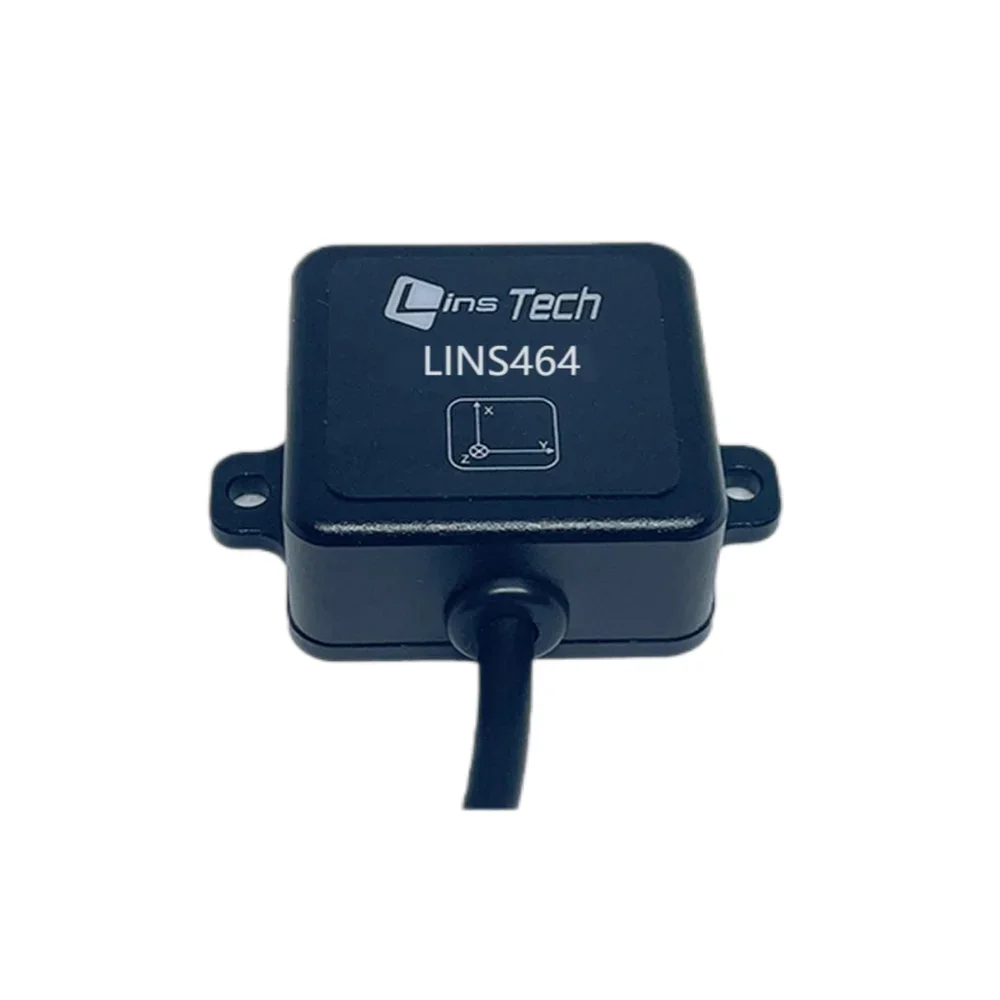
Micro-Electro-Mechanical System (MEMS) Inertial Measurement Units (IMUs) have evolved into essential sensing components in modern robotic platforms and unmanned aerial vehicles (UAVs). They enable real-time perception of motion, orientation, and positioning—capabilities that form the core of autonomous system intelligence. As the demand for high reliability, reduced size, and cost-effective solutions rises, companies such as LINS, a high-tech enterprise specializing in advanced inertial sensing R&D and product integration, play a vital role in pushing the boundaries of accuracy and operational robustness.
Understanding the Role of MEMS IMUs in Autonomous Systems
An IMU integrates gyroscopes, accelerometers, and sometimes magnetometers to continuously estimate 3D movement. In robotics and aerospace fields, this translates into:
-
Stable Attitude Control
Ensuring smooth flight trajectories and robot maneuvering -
Autonomous Navigation
Providing orientation and motion data when GPS is unavailable or degraded -
SLAM and Mapping Support
Key input for visual-inertial fusion systems used in mapping and positioning -
Payload Stabilization
Supporting gimbals for high-quality imaging and inspection -
Safety and Fault Detection
Identifying anomalies in motion patterns to enhance operational safety
Because IMUs operate independently from external infrastructures, they remain functional in tunnels, dense forests, warehouses, mines, or electromagnetic-interference environments where GNSS is unreliable.
Key Considerations When Choosing a MEMS IMU
Selecting an IMU is not simply checking a specification sheet. System developers should evaluate:
-
Bias instability and angle random walk to ensure precise motion tracking over time
-
Dynamic performance and bandwidth for fast attitude changes such as high-speed flight or robotic joint movements
-
Shock, drop, and vibration compatibility important for heavy-lift drones or mobile robots operating on uneven terrain
-
Extended environmental performance including temperature compensation and long-term stability
-
Factory calibration and built-in compensation reducing integration cycle time
-
Interfaces and protocol compatibility for quick system-level deployment
LINS integrates high-precision MEMS components with proprietary calibration and error-compensation algorithms, delivering superior stability even in long-duration missions or harsh operational domains such as emergency response UAVs and automated logistics robotics.
Best Practices for Hardware Integration
Even the best IMU can perform poorly if integrated incorrectly. During system design, engineers should consider:
-
Rigid mounting with minimal structural resonance
Improves motion fidelity and reduces vibration-induced errors -
Placement near the center of gravity
Reduces translation-to-rotation coupling errors -
Dedicated, low-noise power supply
Prevents electrical interference from motors, ESCs, or radios -
Thermal isolation or controlled heating
Minimize thermal drift during rapid temperature shifts such as outdoor flights -
EMI shielding and grounding
Ensures stable output in high-power environments
LINS product portfolios include ruggedized IMU modules that simplify integration through compact encapsulation, industrial-grade connectors, and optimized anti-vibration design.
Sensor Fusion and Algorithm Optimization
MEMS IMU data benefits from intelligent processing. Sensor fusion enhances reliability and positional accuracy through techniques such as:
-
Extended and Unscented Kalman Filtering for seamless multi-sensor fusion
-
Zero-velocity update (ZUPT) and motion constraint models reducing drift accumulation
-
Adaptive algorithms responding to changing vibration environments or motion dynamics
-
Integration with LiDAR, RTK-GNSS, UWB, and vision sensors for robust SLAM and navigation
With complete software toolkits and deep algorithmic know-how, LINS helps developers accelerate data fusion integration in both development and mass-production projects, ensuring faster time-to-market.
Testing, Calibration, and Lifecycle Maintenance
MEMS performance is influenced by aging, vibration fatigue, and temperature cycling. Therefore:
-
Real-world scenario validation is crucial before final deployment
-
Continuous flight data logging and playback analysis improves filter tuning
-
Periodic recalibration maintains long-term precision, especially for high-intensity missions
-
Health monitoring and intelligent compensation reduce maintenance downtime
LINS provides professional calibration services and remote integration support, ensuring that long-life applications—like industrial robots or environmental-inspection UAV fleets—operate at peak consistency.
Applications in Robotics and UAV Innovations
As autonomy expands, high-performance IMUs are becoming foundational across multiple sectors:
-
Urban delivery drones navigating GNSS-challenging skylines
-
Smart agriculture UAVs performing spray routes with centimeter-level precision
-
Warehouse AGVs and AMRs executing automated logistics operations
-
Inspection robots working in nuclear plants, pipelines, and offshore rigs
-
Mapping and survey platforms capturing terrain and infrastructure data
-
Service robots assisting in medical, hospitality, and office environments
From advanced AI navigation to coordinated swarm robotics, IMUs remain a core enabling technology empowering autonomy.
Conclusion
Successful integration of MEMS IMUs in robotics and UAV systems requires more than sensor selection—it demands scientific mechanical installation, robust electrical design, advanced fusion algorithms, and long-term maintenance strategies. By collaborating with experienced inertial makers, developers can significantly enhance navigation accuracy, stability, and mission reliability.
LINS, with its strong capabilities in R&D, calibration, algorithm innovation, and industrial-grade product development, continues to deliver high-quality IMU solutions that support the next generation of autonomous systems across the globe.
http://www.lins-imu.com
Wuxi LINS Technology Co., Ltd. -
-
AuthorPosts

- You must be logged in to reply to this topic.